The Easel

21st July 2026

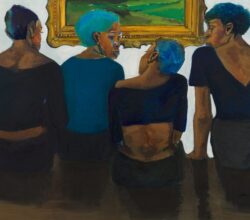
Lynette Yiadom-Boakye: Many A Moonlit Caveat

A dreamy review of Yiadom-Boakye’s latest show. These works seem familiar – figures captured in mid-action, alone or in groups. They are not studies of actual people but imagined figures, placed in plain, neutral interiors. What accounts for their enigmatic pull? People are doing things but it is hard to know exactly what. Of one figure “He is dressed for himself. He is not performing for you. … His dignity persists, seriously and without your permission.”
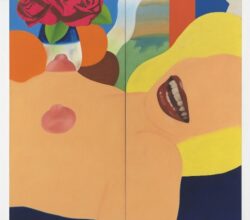
‘Get wild’: 10 things to know about Tom Wesselmann

A backgrounder. After trying his hand at cartooning, Wesselmann got interested in art, moved to New York and became an important Pop artist.  Steering away from abstract expressionism, his breakthrough came with Pop-styled nudes, both figures and body parts such as “seductive, ominous mouths”. He also had a long interest in collage, making still lifes with advertising material. The writer hastens to add that during the 1960’s sexual revolution “Wesselmann is able to toe the line very gracefully”.

14th July 2026

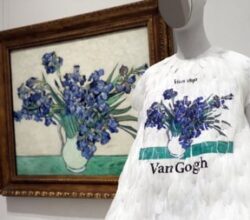
Controversial Costumes at the Met’s Newest Galleries

New York’s Met reasons that because the human body is everywhere in art, fashion deserves a place in the museum. Interspersing artworks among the 200 garments on show brings to life the curator’s view that “the dressed body becomes a prism through which we view [art]”. Some go along with the argument while others state the obvious – “fashion gets people through the doors”. And one writer bells the cat: “it isn’t about the body but about the clothes. It’s an infomercial for the fashion industry.” Images are here.

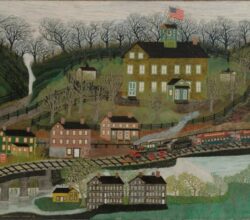
Who gets to be an American artist?

Many American cultural traditions at the turn of the 20th century were embodied in ‘folk art’. Mostly created by “uncredentialled’ artists, it was soon swept aside by Europe-based modernism, relegated to a lesser class of vernacular or outsider art. Although some work shows the influence of immigrant groups, it collectively displays “distinctly American qualities” and tells half-forgotten stories, Says a curator “folk art is an equally essential facet of the American artistic tradition”.