The Easel

24th February 2026

The Worst Show of 2025

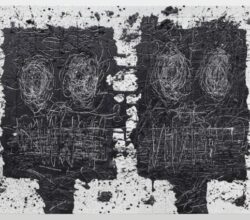
When Johnson’s show opened at the Guggenheim, a critic wondered whether his work was “activism or just décor”. Those doubts persist. Johnson is “just okay” as an artist – so how did he get this prestigious retrospective? Perhaps it’s because his “post-black” work is “citation heavy”, meaning that evaluation of his art is deflected into discussions of “biography and identity”. Palm trees have been hung in the museum’s central void, perhaps “a way to nervously fill that famous space, as if the art itself isn’t enough”.
Between Worlds: Visitors to 37-08 Utopia Parkway

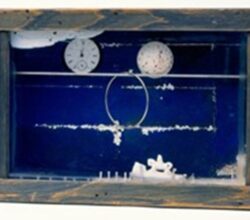
Cornell’s studio has been re-created in a Paris gallery, bringing many reminiscences of this unusual artist. He lived in suburban New York and dreamed of travelling to Paris. His collages, box assemblages and films were made with materials from bric-a-brac stores. Inspired by surrealism his boxes are exercises in “urban reverie”. Despite friendships with many notable artists, he was a loner – or as a friend called him, a monk. Says a curator, Cornell was “born on the wrong continent at the wrong time”.

17th February 2026

Eugène Atget, Readymade Icon

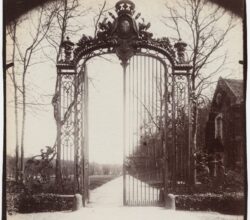
As Paris modernised, Atget had the idea of photographing the old cluttered parts of the city.  It turned into a 30-year project. He didn’t think of himself as an artist, describing his images merely as “documents”. They were utilitarian is style, notably views of buildings taken around dawn when the streets were empty. Somehow those quiet images felt unsettling. Few of his photographs were printed in his lifetime but Atget is now regarded as a “precursor of modern photography”.

“Gainsborough: The Fashion of Portraiture” Goes on View At The Frick Collection

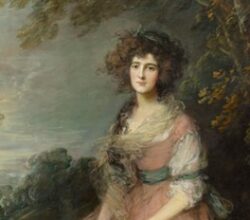
When Gainsborough moved to Bath, his studio was next door to an upmarket health spa where he could observe the latest fashions. Those fashions can now be seen to have reflected important social changes. Britain’s wealth accumulation in the later 1700’s was immense, due to slavery, plantations, banking and factories. A new middle class wanted what the aristocracy had, including beautiful clothes and flattering Gainsborough portraits. It seems he tired of all the “upward striving”, calling it “the curs’d Face Business”.