The Easel

22nd July 2015

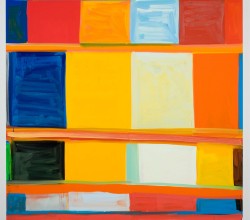
Stanley Whitney on His Show at New York’s Studio Museum in Harlem

Whitney knew from early on that colour was central to his art. As a young artist he drew inspiration from Velasquez, Mondrian and others but then had to resist the drumbeat of 1970’s Minimalism which deemed colour to be superficial. Only during a 1990’s visit to Egypt’s pyramids did he finally get his “Ah-ha” moment. His first ever museum show in New York has produced a flurry of reviews and the unmistakable sound of an artist’s reputation being significantly upgraded.

Three Stars Shine Brightly at the 56th Venice Biennale: Joan Jonas, Sarah Lucas, and Celeste Bourisier-Mugenot

The early reviews of the Venice Biennale were mostly heavyweights commenting on its overall curatorial merit. Now, there is a small but steady flow of reviews looking at the work of individual artists. With the Biennale having focused on including more female artists and artists of colour, this reviewer picks out three favourites, all of which are all examples of excellence.

They Once Touched Roman Lips

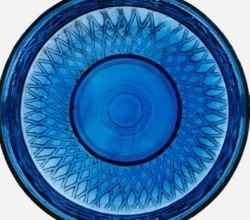
Glass blowing apparently emerged on the southern fringes of the Roman Empire around 100BC and quickly eclipsed other methods of working glass.  The glassblower Ennion came from what is now Lebanon and became one of the eminent glass artists of his era. A show in New York highlights the graceful quality of his work, a quality that is still sought after in today’s art glass.

German Culture minister defends controversial art law

Wanting to tell your national story through art is laudable. Germany is considering a law to protect its artistic inheritance by restricting international sales of significant works. In a classic case of unintended consequences a storm of protest has erupted among artists such as Bazelitz and Richter, who fear limits on their artistic freedom.

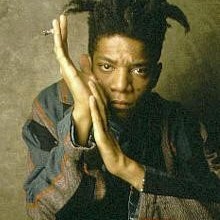
Jean-Michel Basquiat: The life and work behind the legend

Basquiat had such a dramatic impact on New York’s art world that when he died at age 27 in 1988, an aura of genius was bestowed on his art. At the time, Robert Hughes was a notable sceptic – “a small untrained talent caught in the buzz saw of art-world promotion…” On the other hand, a show at Guggenheim Bilbao is no small achievement. This author is also a supporter:  “”Ultimately, his paintings move us – and that’s his main achievement.””

Image: Wikipedia

Marc Quinn: “You can’t be Turner in the age of global warming”

Twenty odd years after it was first coined, the YBA’s (Young British Artists) tag is still firmly in place. Whether it is relevant to understanding the work of this diverse group of artists is debatable. Marc Quinn is a YBA and came to public notice with a sculpture of his head made from his own blood. However, the artist that emerges in interview is less a 1990’s tearaway and more the thoughtful inheritor of the rich heritage of British art.

Caro in Yorkshire, Yorkshire Sculpture Park & Hepworth Wakefield, review: ‘essential

When Caro met the American sculptor David Smith, he immediately left behind the figurative style taught to him by Henry Moore. He began working with large pieces of (often brightly painted) steel, assembled into abstract works of delicacy and balance. Moore initially dismissed this new work as “window dressing” but, as two current shows demonstrate, Caro was actually mapping out the new territory of 20th century abstract sculpture.

15th July 2015

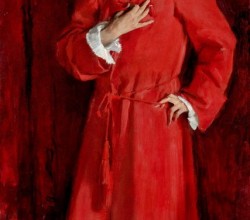
Review: Sargent’s Intimate Portraits of Friends at the Metropolitan Museum

Sargent funded his lifestyle by doing society portraits – “high polish” jobs of the great and the good. But with this particular clientele it was important that he self-edit – his too-candid portrait of Madame X led to him leaving Paris. A current show reveals that when painting for himself and his friends a different style came to the fore:  –“a relaxed recklessness of a kind that scintillates”

The ARTNEWS Top 200 Collectors: An Introduction

During their two weeks of auctions in New York, Christies and Sotheby’s together transacted $2.5bn worth of art. That’s serious money. Behind this headline is a range of stories about new players and new collecting trends. For those who are anxious that art prices may be a bubble (the trend that dares not speak its name) assurance is given that “there is a comfort zone at the new price levels”

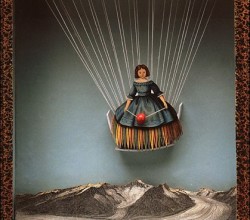
Joseph Cornell: Wanderlust review – like being lost in a wondrous Victorian attic

Living with his mother and disabled brother in suburban New York, Cornell dreamed of historic Europe. So, in his basement he made intricate shadow boxes filled with objects from New York’s bric-a-brac stores. Thus was produced one of the most original bodies of work of any twentieth century American artist. Critics draw different narratives from his work, but Cornell’s own description is nice: ”the light of other days”.
Image: Wikipedia

Gods and Monsters: A History of Celebrity Portraiture

Glossy images and a nice bit of text. Getty Images is an international photo agency. A new exhibition at its London gallery showcases celebrity portraits drawn from an enormous back catalogue. Given the diversity of images in social media, it is surprising how different some of the older ones feel. More images are here.

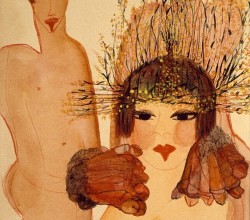
Sex Is Both Rude and Sweet in an Italian Modernist’s Oeuvre

Critics sometimes appear to forgive an artist’s lapses if they are popular but can be uncompromising toward those less prominent.  Carol Rama developed as an artist outside Italy’s art school establishment and has mostly been unheralded. Her less successful styles are held up for all to see, even though the overall verdict is clear cut: “an astonishing, incendiary, lighthearted body of work that flickers with greatness”

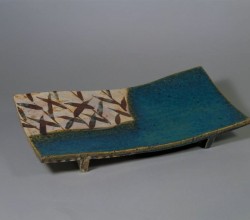
Kitaoji Rosanjin only served the very best

This review of a major Tokyo exhibition opens with this quote “If clothes make the person, dishes make the food”. What emerges is not a foodie piece but a discussion of ceramics, overlaid with the Japanese idea of “beauty in use”. This speaks to a broad concept of art – certainly not something limited to art gallery walls. The artist is described as a once in 500 year genius but, beyond that, none of the usual pigeonholes seem to quite fit