The Easel

6th August 2024

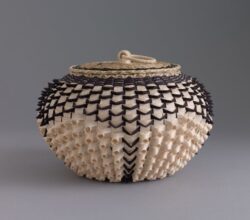
How Jeremy Frey changed the way the art world sees Wabanaki basketmaking

The Wabanaki, a group of Maine First Nations, have always made both decorative and working baskets. Frey was born into that tradition of weaving ash wood and sweetgrass but was inclined to “tweak”. His intricate baskets are now seen as contemporary art and have revitalised basketry as a form of Indigenous self-expression. Intones New York’s Met, which now has one of his works, Frey “merges Wabanaki Indigenous weaving methods with the symmetrical forms of classical European ceramics”.
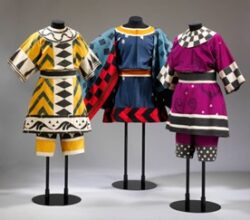
Music for the Eyes: “Crafting the Ballets Russes” at the Morgan Library & Museum

Gesamtkunstwerk is a mouthful – it’s the German word for combining multiple art forms into a “total work of art”. Nowhere is the idea better applied than to Ballets Russes, a 1909 spin off from Russia’s Imperial Ballet. It was an all-star affair – music by Stravinsky and Debussy, set designs by Picasso and Matisse, and dancers like the incomparable Nijinsky. On all measures, Ballets Russes was a cultural sensation, described by one writer as “an attempt of the twentieth century to create civilized pleasure.”

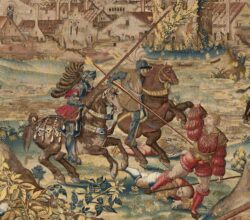
Massive tapestries at the Kimbell depict 1525 Battle of Pavia in impressive detail

The Battle of Pavia in 1525 saw the Holy Roman Emperor (Charles V) vanquish the French. To commemorate, Charles turned to the most highly prized art form of the Renaissance, tapestries. Woven in fine wool and silk, with gold and silver highlights, the seven “monumental” Pavia tapestries took years to complete. Amidst many sumptuous details is the interplay of northern Europe’s attention to detail with the Italian preference for buff bodies. “Tapestries were indispensable to the articulation of authority”.

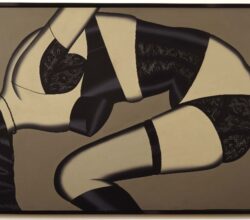
Here’s What You Need to Know About Chicago Imagist Christina Ramberg and Her ‘Furtive Figuration’

Ramberg came to prominence as one of the Imagists, a loose grouping of Chicago artists working in that city’s tradition of expressive figuration. From the start, she had a distinct aesthetic – a flat pictorial space showing isolated female hands, hair or torsos. A bit like comics, this was figuration with limited information. Ramberg’s paintings are especially striking, says one writer, because of their “strangeness … the byproduct of following a certain line of thought … often beautiful, deeply strange pictures”.  Images are here.

30th July 2024

Glamour, Glory and Gone

Around 1960, Marisol was a star of New York’s art scene. Not only did her bulky totemic figurative sculptures grab attention, but she also stood out as a glamorous female sculptor in a macho art world. Her works dealt explicitly with families, female roles and male privilege. International acclaim peaked in the late 1960’s and, although remaining prolific she faded from view. Her death, decades later, brought the headline the “forgotten star of Pop Art”. Art history, it seems, is now writing Marisol back in.