The Easel

1st August 2023

A Must-See Matthew Wong Retrospective Reveals New Sides of an Artist Whose Story Is Still Emerging

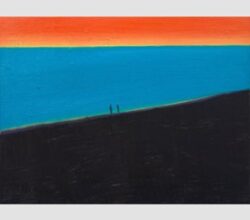
Art history loves the story of the young artist suddenly struck by greatness. Such stories are prone to exaggeration and in Wong’s case become “too grandiose for work that’s so humble”. A Boston show includes among his earliest works a few of his duds. It took him a little time to find his footing as a Canadian of the Asian diaspora. Once he did, though, his unique, lush landscapes with their small insignificant figures included a bounty of masterpieces. Images are here.
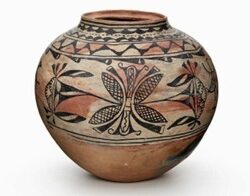
Pueblo Pottery Comes To Manhattan At The Met And Vilcek Foundation

Pueblo pottery, a quintessential Native American art form, is regularly evaluated by museum curators in terms of Western aesthetics. Puebloans think that is a misunderstanding. To them, pottery is all about a “group narrative”, about people and place. A pottery show, currently in New York, takes a community approach to curation, with over 60 individuals involved. Said one, about a favourite piece, “[it] sings loudly to me through its design and its lived experience.” Interactive images are here and a video here.

“Becoming Van Leo”

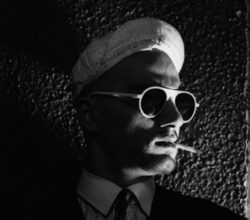
Our interest in identity long pre-dates social media. Take the case of Van Leo, the Cairo-based photographer. Fascinated by Hollywood imagery, he used the same style for Egyptian film stars… and himself. Starting in the 1930’s he created multiple identities that spanned gender, race and class. Cindy Sherman and Gillian Wearing have made these explorations feel commonplace but Van Leo’s puzzled contemporaries thought he was “a sort of Hollywood-adjacent enigma.” Images are here.

25th July 2023

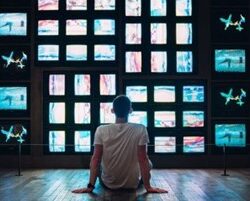
Video art cuts through the noise. But the noise is getting louder

Is the vitality of video art fading away? A large survey show in New York has critics calling it “elegiac”, “I’m anything but enthusiastic”, or even “it’s a post-mortem”. One critic admits he still had “no idea” if he liked it. Video emerged in a world dominated by network television but now it’s all about smart phones and social media. Can video art be a “cultural signal” when we are learning that images can’t be trusted? “Reality itself begins to feel fugitive. We [want to dispel] the mental torpor of “screen time.””

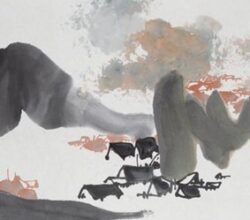
Lui Shou-Kwan’s Zen Painting and American Abstraction

Chinese ink painting, like calligraphy, balances disciplined form and personal expression. Lui trained in that tradition but, seeing contemporary 1950’s American art, decided to apply a modernist sensibility. His “zen” paintings have a spontaneous “splashing” brushwork that he said drew on Chinese traditions of abstraction. Besides pioneering the New Ink painting movement, his work attracted international interest already whetted by the wave of abstraction coming out of New York.