The Easel

3rd March 2026

Jasper Johns: between the clock and the bed

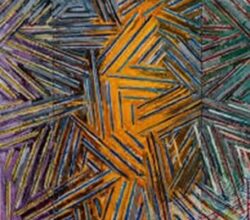
An interview with an obvious commercial slant, but interesting, nonetheless. When Johns started making “crosshatch” paintings in 1972, they were abruptly different from his previous work. These “fraught and fidgety” patterns bore no relation to pop art but neither did they have the emotional drama of artists such as Pollock and Rothko. Some speculated that he was referencing Picasso and Munch. Mostly though, they showed that Johns “didn’t just know how to paint, he knew how to make a painting do more.”
24th February 2026

The Worst Show of 2025

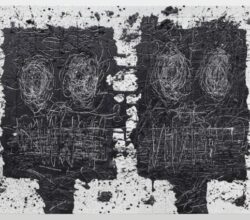
When Johnson’s show opened at the Guggenheim, a critic wondered whether his work was “activism or just décor”. Those doubts persist. Johnson is “just okay” as an artist – so how did he get this prestigious retrospective? Perhaps it’s because his “post-black” work is “citation heavy”, meaning that evaluation of his art is deflected into discussions of “biography and identity”. Palm trees have been hung in the museum’s central void, perhaps “a way to nervously fill that famous space, as if the art itself isn’t enough”.

Between Worlds: Visitors to 37-08 Utopia Parkway

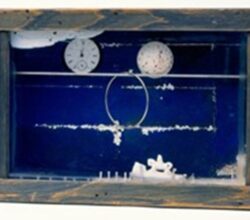
Cornell’s studio has been re-created in a Paris gallery, bringing many reminiscences of this unusual artist. He lived in suburban New York and dreamed of travelling to Paris. His collages, box assemblages and films were made with materials from bric-a-brac stores. Inspired by surrealism his boxes are exercises in “urban reverie”. Despite friendships with many notable artists, he was a loner – or as a friend called him, a monk. Says a curator, Cornell was “born on the wrong continent at the wrong time”.