The Easel

15th July 2015

Review: Sargent’s Intimate Portraits of Friends at the Metropolitan Museum

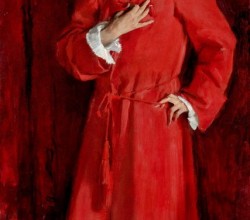
Sargent funded his lifestyle by doing society portraits – “high polish” jobs of the great and the good. But with this particular clientele it was important that he self-edit – his too-candid portrait of Madame X led to him leaving Paris. A current show reveals that when painting for himself and his friends a different style came to the fore:  –“a relaxed recklessness of a kind that scintillates”
The ARTNEWS Top 200 Collectors: An Introduction

During their two weeks of auctions in New York, Christies and Sotheby’s together transacted $2.5bn worth of art. That’s serious money. Behind this headline is a range of stories about new players and new collecting trends. For those who are anxious that art prices may be a bubble (the trend that dares not speak its name) assurance is given that “there is a comfort zone at the new price levels”

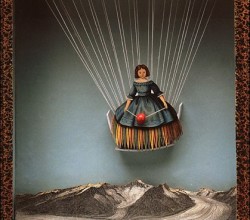
Joseph Cornell: Wanderlust review – like being lost in a wondrous Victorian attic

Living with his mother and disabled brother in suburban New York, Cornell dreamed of historic Europe. So, in his basement he made intricate shadow boxes filled with objects from New York’s bric-a-brac stores. Thus was produced one of the most original bodies of work of any twentieth century American artist. Critics draw different narratives from his work, but Cornell’s own description is nice: ”the light of other days”.
Image: Wikipedia

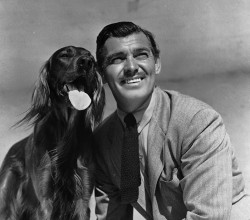
Gods and Monsters: A History of Celebrity Portraiture

Glossy images and a nice bit of text. Getty Images is an international photo agency. A new exhibition at its London gallery showcases celebrity portraits drawn from an enormous back catalogue. Given the diversity of images in social media, it is surprising how different some of the older ones feel. More images are here.

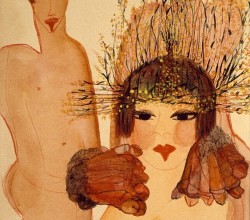
Sex Is Both Rude and Sweet in an Italian Modernist’s Oeuvre

Critics sometimes appear to forgive an artist’s lapses if they are popular but can be uncompromising toward those less prominent.  Carol Rama developed as an artist outside Italy’s art school establishment and has mostly been unheralded. Her less successful styles are held up for all to see, even though the overall verdict is clear cut: “an astonishing, incendiary, lighthearted body of work that flickers with greatness”

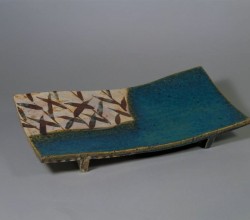
Kitaoji Rosanjin only served the very best

This review of a major Tokyo exhibition opens with this quote “If clothes make the person, dishes make the food”. What emerges is not a foodie piece but a discussion of ceramics, overlaid with the Japanese idea of “beauty in use”. This speaks to a broad concept of art – certainly not something limited to art gallery walls. The artist is described as a once in 500 year genius but, beyond that, none of the usual pigeonholes seem to quite fit

8th July 2015

Richard Estes Painting New York City

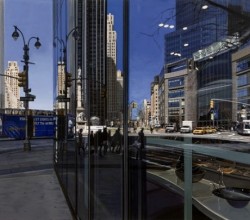
The photorealist pioneer Richard Estes has been painting New York’s visually chaotic streetscape for over 50 years. But why bother with the minute detail of photorealism when cameras are available?  David Hockney, himself a prolific user of cameras, is quite clear: “A camera cannot see what a human can see, there is always something missing”

Previously unseen painting of the woman who broke Lucian Freud’s heart

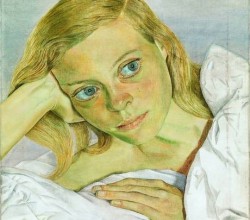
Lucien Freud’s reputation looms large. Incredibly selfish in his private life and fearsomely honest as a painter, he produced a wonderful body of work that focused intently on the human form. His marriage to Caroline Blackwood was a union of social and intellectual equals, even though he was much older. The strength she had to survive his recklessness is presumably what animates his portraits of her, now on show in London.

Hullywod Boulevard – Failure’s more spectacular than success

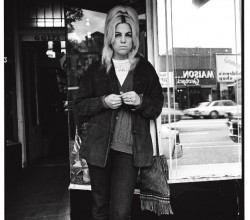
Dennis Feldman wanted to be a movie director and, while figuring out how to break into the industry, he took street photos. He was drawn to where “the veil between the seen and the unseen is thinnest. …On Hollywood Boulevard you could see the cracks in the performance”. Forty years later, after a successful movie career, he has published his old photos. More images with Feldman’s comments are here.

From Chandigarh to Chichester: The Rock Garden Sculptures of Nek Chand

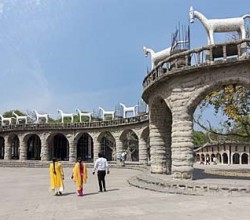
By day, Nek Chand was a Punjabi roads inspector but at night he went into the forest and created a sculpture garden using materials from demolition sites. When the garden was discovered after 15 years, it was already 13 acres in size. Decades later it is one of the most visited sites in India and has influenced India’s thinking about  public spaces. The first hint of government support came when he was given a befitting title – “Subdivisional Engineer, Rock Garden”.

Agnes Martin in Two Books: A Life Revealed

Still rivers run deep. Agnes Martin’s show at the Tate (noted in a recent Easel) highlighted the calmness in her work, a quality also noted in two new books about her. It is surprising that she saw herself not as, say, a Minimalist but as an Expressionist and it makes this quote revealing:  “When I had the inspiration for the grids, I was thinking of innocence[,] and the image was a grid. That was it. I thought, ‘My god, am I supposed to paint that?’”

Germaine Krull, photographer

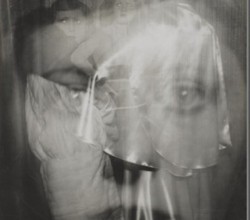
An artist’s reputation can be influenced significantly by the public availability of their work. In the case of the German photographer Germaine Krull, much of her pioneering work in the 1920’s on fashion, nudity and industrial imagery was for magazines, meaning that the images have stayed in corporate archives. Recent releases of some of this material is generating a critical reassessment and a retrospective at the Jeu de Paume in Paris.