The Easel

8th July 2015

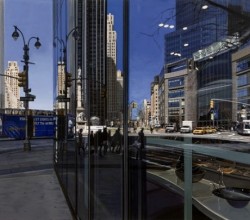
Richard Estes Painting New York City

The photorealist pioneer Richard Estes has been painting New York’s visually chaotic streetscape for over 50 years. But why bother with the minute detail of photorealism when cameras are available?  David Hockney, himself a prolific user of cameras, is quite clear: “A camera cannot see what a human can see, there is always something missing”
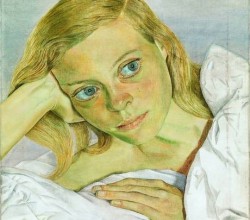
Previously unseen painting of the woman who broke Lucian Freud’s heart

Lucien Freud’s reputation looms large. Incredibly selfish in his private life and fearsomely honest as a painter, he produced a wonderful body of work that focused intently on the human form. His marriage to Caroline Blackwood was a union of social and intellectual equals, even though he was much older. The strength she had to survive his recklessness is presumably what animates his portraits of her, now on show in London.

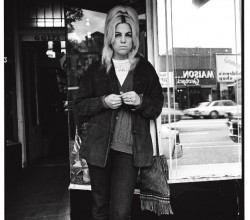
Hullywod Boulevard – Failure’s more spectacular than success

Dennis Feldman wanted to be a movie director and, while figuring out how to break into the industry, he took street photos. He was drawn to where “the veil between the seen and the unseen is thinnest. …On Hollywood Boulevard you could see the cracks in the performance”. Forty years later, after a successful movie career, he has published his old photos. More images with Feldman’s comments are here.

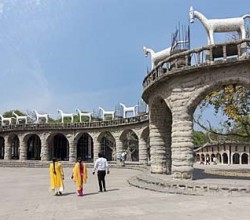
From Chandigarh to Chichester: The Rock Garden Sculptures of Nek Chand

By day, Nek Chand was a Punjabi roads inspector but at night he went into the forest and created a sculpture garden using materials from demolition sites. When the garden was discovered after 15 years, it was already 13 acres in size. Decades later it is one of the most visited sites in India and has influenced India’s thinking about  public spaces. The first hint of government support came when he was given a befitting title – “Subdivisional Engineer, Rock Garden”.

Agnes Martin in Two Books: A Life Revealed

Still rivers run deep. Agnes Martin’s show at the Tate (noted in a recent Easel) highlighted the calmness in her work, a quality also noted in two new books about her. It is surprising that she saw herself not as, say, a Minimalist but as an Expressionist and it makes this quote revealing:  “When I had the inspiration for the grids, I was thinking of innocence[,] and the image was a grid. That was it. I thought, ‘My god, am I supposed to paint that?’”

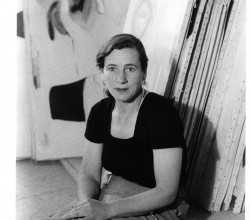
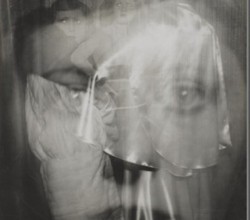
Germaine Krull, photographer

An artist’s reputation can be influenced significantly by the public availability of their work. In the case of the German photographer Germaine Krull, much of her pioneering work in the 1920’s on fashion, nudity and industrial imagery was for magazines, meaning that the images have stayed in corporate archives. Recent releases of some of this material is generating a critical reassessment and a retrospective at the Jeu de Paume in Paris.

30th June 2015

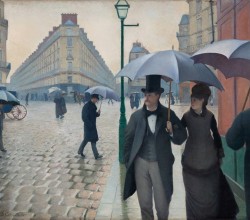
At the National Gallery, Caillebotte’s intersection with greatness

The Impressionists regarded Caillebotte as one of themselves even though his style was more formal and he preferred painting the life of the city rather than stereotypical “Impressionist” landscapes. Over time his name has faded from public view. However, as an exhibition in Washington demonstrates, his lower profile among that hallowed group of painters does not reflect any lack of artistic merit.

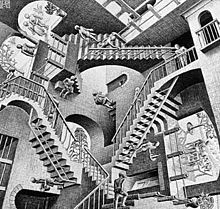
MC Escher: An enigma behind an illusion

Just out of art school, the influential printmaker Maurits Escher visited the Alhambra and was taken by its geometric mosaics. This led to an interest in mathematics and subsequently his famous “impossibility objects”. A sketchbook that he published encouraged mathematicians to claim him as a colleague, which perhaps didn’t do him any favours in the art world. Decades after his death, he is getting a rare retrospective – in an art gallery

Image: Wikipedia

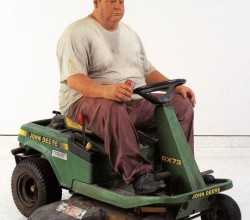
Duane Hanson, Serpentine Sackler gallery, exhibition review: profoundly unsettling

When the 1950’s American art establishment was agog with Abstract Expressionism, Duane Hanson was off making hyper-realistic sculptures. Early pieces relating to abortion caused an uproar. This show covers his later sculptures which focused on working people who are overlooked in society. Numerous reviews make it is clear that these works still pack a punch. The images here are well worth viewing.

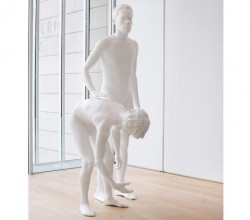
Charles Ray’s sculptures cast a forceful modern eye on antiquity

Art critics, when viewing contemporary art, sometimes struggle with the “where does it fit” question. Not so with Charles Ray, the prominent American sculptor. His indebtedness to sculpture traditions are all laid out in an interesting, sometimes intricate essay. Says this smitten critic of one piece: “If… traditional sculpture represents dormant consciousness, then “Sleeping Woman” is an entire genre’s brilliant incarnation.”

A Met Exhibit Contains Multitudes In Just Four Of van Gogh’s Flower Still Lifes

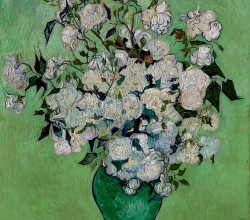
New York’s Metropolitan has opened a van Gogh “anti-blockbuster”. It has reunited, for the first time, four floral studies completed shortly before his death. Having so few paintings to look at leads to a more considered verdict. The colour loss in some pictures is dramatic but collectively they show qualities not always associated with this most famous of names – “intensity, modesty, and doggedness. Call them van Gogh’s secret.”

Barbara Hepworth: forms and hollows

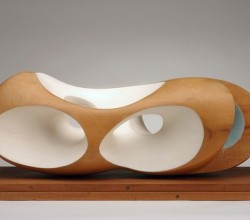
The Tate’s retrospective of Barbara Hepworth is the third of three major shows of female artists held this year. Hepworth’s graceful abstractions are duly noted (a nice video clip is here) but a sharp overall assessment is offered of her and the other artists – a lack of “intellectual charge”. “Has a woman artist ever done so? The stories here show that female artists tend to assimilate and adapt radicality pioneered by men.”

For Gavin Brown’s Closing Act, Jannis Kounellis’s Iconic Untitled (12 Horses)

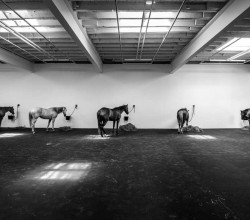
This starts off like an exhibition review but isn’t. Gavin Brown’s Enterprise was a New York gallery with a reputation for the unconventional. After 20 years, it is relocating. This piece reveals itself to be a lament about galleries like GBE that promote “the kind of art that they thought helped people”. Quirky to the last, the closing show included horses tethered to the walls of the gallery