The Easel

6th June 2015

Horrible Art Histories

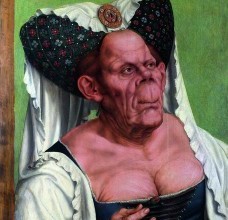
Interesting short lesson in art history. Grotesque art only got its name when Roman buildings were excavated during the Renaissance. The ‘art of the grottoes’ had an immediate impact on contemporary artists such as Raphael and has remained influential via artists such as Goya and the Surrealists. Today, computer generated graphics and new materials promise a new age of the horrible.

We’ve scrubbed Dennis Nona’s art from our galleries to our cost

A prominent Australian artist has been jailed for serious crimes and, in response, some public galleries have removed his art from their walls. ” I am all in favour of historical reassessments … but the moment we start to read our contemporary moral values into an artist’s biography, no matter how justified, and use this as a yardstick in the assessment of their art, I suspect we are on a very slippery path.”

Repairing the World: The Road to The Rothko Chapel

Rothko’s early life experiences as a Russian Jewish immigrant were not extinguished by subsequent fame and fed into his taste for themes that were “tragic and timeless”. A new book argues that his enigmatic art was freighted with meaning from Judaism and the 20th century Jewish experience.

Review: Pierre Bonnard Paints Arcadia At The Musee D’Orsay

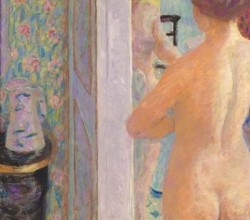
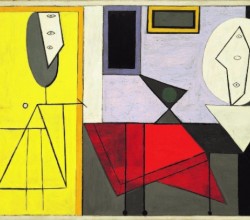
Picasso disliked Bonnard’s work – “a potpourri of indecision” – but then he was not one for serenity. Bonnard’s greatness -fully on display in a large exhibition in Paris – was based on his paintings of domestic life. “He idealized the world in his little house in the hills above Cannes, playing with colours and light, painting Marthe again and again, his nose close to his canvas, sublimating her body in the same way he sublimated nature.”

Christina Mackie Sets Duveen Galleries Ablaze with Colour at Tate Britain

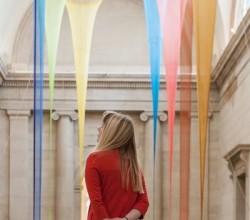
The Director of Tate Britain has just resigned amid criticism that she was too scholarly. Meanwhile, the foyer is ablaze with colourful silk tubes. This essay argues that major galleries need to strike a balance between scholarship and the desire to attract crowds.  “… the vast un-use of space asks its own question… shouldn’t we expect a bit more of art than just the feeling of being wowed by big things in even bigger spaces? It’s a nice sensation to have at the fairground, but who needs it in an art gallery?”

Watching Them Turn Off The Rothko’s

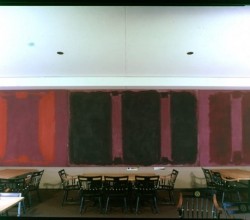
Harvard University commissioned several paintings from Rothko for a dining room, failed to protect them and they have faded badly. Unable to be physically restored, hi-tech projectors instead shine coloured light on the paintings to compensate for the damage. Are they still authentic Rothko’s? “As one observer put it, when the lights go off, comedy turns into tragedy.”

Seeing a Cash Cow in Museum’s Precious Art

Public galleries have always found ways to sell off redundant art works. But what about selling off core pieces in a collection to pay some bills … or to make gallery repairs and renovations … or to fund public sector pensions? What priority should be given to safeguarding “cultural identity” and who decides which “treasures” are essential to this?

The Tracy Emin I Discovered, and You Need to Know

A high public profile sometimes obscures the artist. Emin’s early career controversy – her nickname was ‘mad Tracy from Margate’ – contrasts with growing critical acclaim and a professorship of Drawing at the Royal Academy. In response to some in-your-face questions, she reflects candidly on her art and sources of inspiration. Her controversial installation piece “My Bed” is now on display at Tate Britain (reviewed here)
Image: Wikipedia

On Mapplethorp’s Polaroids

Arthur Danto was a pre-eminent US art critic and in 2001 wrote an influential piece on the work of the photographer Robert Mapplethorp. An excerpt of this essay has just been re-published. Not only is it an interesting discussion of Mapplethorp’s sometimes controversial photography but it also showcases Danto’s fine writing style as a critic.
Image: Wikipedia

Leonora Carrington: last of the great Surrealists

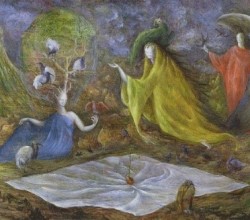
Carrington was presented at Buckingham Palace as a debutante but eloped to Paris with Max Ernst and subsequently escaped the Nazi’s to Mexico City. Her significant artistic achievements have received little recognition in England. This affectionate biographic essay by her journalist cousin describes the background to a retrospective which has just opened at the Tate Liverpool.

Is this the greatest sculpted version of the Easter story? It’s certainly the strangest

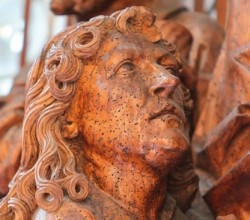
Rothenburg was the location of an ancient miracle and during the Renaissance a large altarpiece was built in its church of St James as a reliquary. German sculpture of this distinction was often richly coloured, but perhaps in deference to its religious narrative, this utterly spectacular wooden sculpture was left plain. This does little to disguise its artistic merit leading the writer to advocate a pilgrimage – for aesthetic if not religious purposes.

‘Keys to a Passion’: the Foundation Louis Vuitton debut show

Bernard Arnault, a French businessman and major art collector, has established the Foundation Louis Vuitton in a purpose-built Frank Gehry gallery in Paris. The first exhibition overflows with masterpieces from across the globe and announces lofty curatorial intentions. This review seems unsure whether to gush more over the art, the building or the institution’s ambition. “Billionaire collectors are not all equal. Any of them can buy, but who can borrow?

Defining beauty – the Body in Ancient Greek Art at the British Museum Gives Visitors Quite an Eyeful

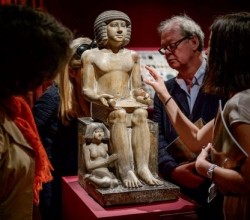
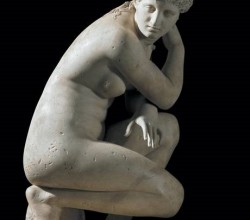
Critics are swooning over a British Museum exhibition of some of the most ravishing sculptures ever made. It is a powerful expression of ancient Greek ideals of beauty. However, ticking away in the background is the dispute about repatriating the Parthenon marbles held by the British Museum which has responded in just the last few days to a proposed mediation.

Gurlitt Bequest to Kunstmuseum Bern is Upheld, Little Else Resolved

In late 2013, German police found 1400 art works in the residences of the elderly Cornelius Gurlitt. His father was an art dealer to Hitler. Some pieces were associated with Nazi art theft and others legitimately owned but in many cases ownership is unclear. Gurlitt re-wrote his will to leave everything to a museum just before he died. That will is being disputed. Moral issues seem clear but nothing else.

On Kawara – Silence at the Guggenheim

Conceptual art is sometimes challenging because it prioritises the “idea” over the intrinsic artistic qualities of the work. Kawara was a Japanese – American conceptual artist who died last year. This essay does a nice job of drawing out the narrative thread of his career.

Finding Forgeries In The Online market

Notwithstanding their virtues, art galleries are a costly way to sell. Online sales are cost-efficient but can you be sure what you are buying? This discussion of the issue of authentication – a problem not perfectly solved anywhere – is interesting because it leaves the impression that online selling has bigger days ahead of it.

What the Racist, Homophobic Kehinde Wiley Backlash is Really About

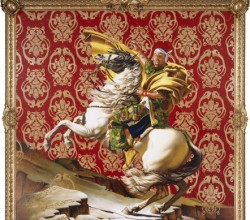
Wiley is a notable younger American artist whose current retrospective in New York is regarded as a ‘must see’ show. Sadly, that is about the limit of what is agreed. Some critics are up in arms about Wiley’s use of Afro-American men in his paintings. Others imply that he is not sufficiently respectful of the Old Masters whose work he appropriates.

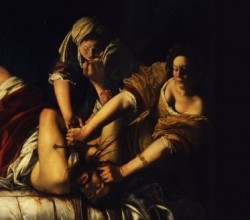
Meet Artemisia Gentileschi, The Feminist Contemporary Of Caravaggio

A woman artist finally joins the story of Renaissance art. Gender bias explains only part of Gentileschi’s low profile. After a prominent early career in Italy she moved to Spanish-controlled Naples and responded to the Spanish preference for a softer, less dramatic style. Today’s admiration for Caravaggio has meant a discounting of her later output – most unfairly according to a new book. Some marvelous images are here.

Is the iPhone a Blessing or a Curse for Art?

A gallery-goer’s smartphone probably influences their engagement with the art more than the wall labels. Is this good or bad? Jackson Pollock felt that photographing his work process turned it into a performance. However, it greatly widened the awareness of his art. Given that museums face declining attendances, perhaps it’s time to constructively make peace with “gadget culture”.

Frida Kahlo and Diego Rivera’s Detroit Year Explored in DIA Show

Rivera and Kahlo were Mexican artists whose spectacularly volatile marriage(s) belied a long and important artistic partnership. A current retrospective focuses on their year in Detroit during which the more prominent Rivera completed a mural for the Detroit Institute of Art. For Kahlo a miscarriage seemed to catalyze her artistic ambitions. Her artistic reputation now perhaps eclipses his and she is seen as a feminist icon.

Global Art Sales in 2014 Break All Known Records

The story told by this report (which was crowded out in last week’s newsletter) is fascinating if you don’t mind all the numbers. Art and power are mutually attractive. The UK dominates the Old Masters market, the US is dominant in Post War and Contemporary art and the US and China are equally important in Modern Art. Major art fairs are huge and online sales growing. A summary with fewer numbers is here.

Isamu Nogochi and the Importance of Public Sculptures in Big Cities

This prominent Japanese-American artist had a pot pourri of early experiences – assistant to Brancusi, designing with Buckminster Fuller, pottery in Kyoto, brush painting in China. What emerged were notable public sculptures, iconic modern furniture (with Herman Miller), theatre set designs (with Martha Graham) and even playground equipment. His sense of design overrode any boundary between fine and applied arts. “To order space is to give it meaning”.

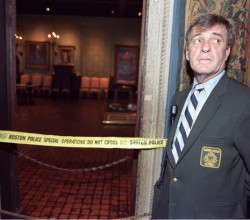
Why Are Art Heists So Fascinating?

A good whodunit is hard to resist. In the case of the 1990 theft of Grand Masters from Boston’s Gardiner Museum, police think they know who did it but have never laid charges. Ironically, the thieves may have been too successful – the paintings were so famous they may have been unsellable. At some point, a priceless painting becomes just a piece of incriminating evidence to be got rid of.

‘Digital’s Bitches’: The New Museum Triennial

Digital art quickly gets tedious when the ‘digital’ is emphasized over the ‘art’. No such mistake in this review of a current New York exhibition. Notwithstanding the art world’s struggle to come to terms with a new digital landscape, the resultant art needs to stand on its own feet, without verbose curatorial notes. ”[T]here’s no such thing as “digital art”… only art that might be inscribed with its ethos.”

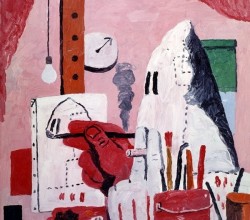
Phillip Guston: Hilarious and Horrifying

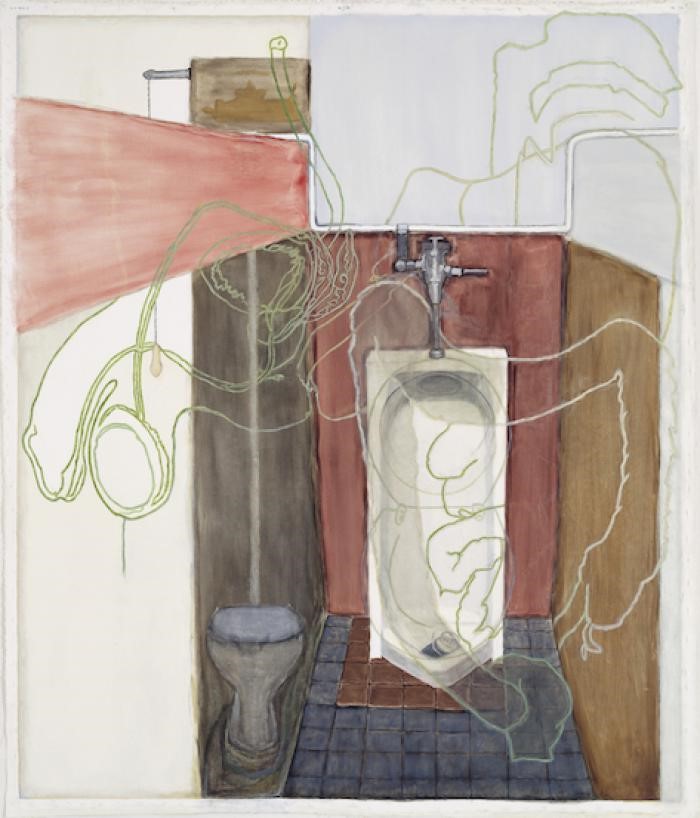
Beautifully written synopsis of a new book on Phillip Guston, the late American artist. Acclaimed in the late 1940’s as a major Abstract painter, he then turned his back on the style that had brought him fame. By 1970 he had developed a more modernist style that was influential among younger artists but did not gain wider recognition until a retrospective one year after his death in 1980.