The Easel

30th June 2015

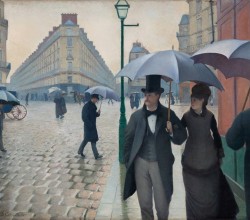
At the National Gallery, Caillebotte’s intersection with greatness

The Impressionists regarded Caillebotte as one of themselves even though his style was more formal and he preferred painting the life of the city rather than stereotypical “Impressionist” landscapes. Over time his name has faded from public view. However, as an exhibition in Washington demonstrates, his lower profile among that hallowed group of painters does not reflect any lack of artistic merit.
MC Escher: An enigma behind an illusion

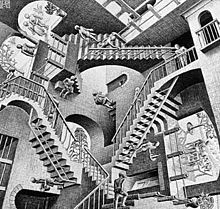
Just out of art school, the influential printmaker Maurits Escher visited the Alhambra and was taken by its geometric mosaics. This led to an interest in mathematics and subsequently his famous “impossibility objects”. A sketchbook that he published encouraged mathematicians to claim him as a colleague, which perhaps didn’t do him any favours in the art world. Decades after his death, he is getting a rare retrospective – in an art gallery

Image: Wikipedia

Duane Hanson, Serpentine Sackler gallery, exhibition review: profoundly unsettling

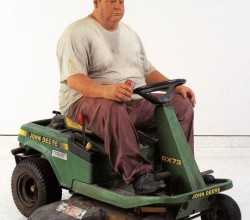
When the 1950’s American art establishment was agog with Abstract Expressionism, Duane Hanson was off making hyper-realistic sculptures. Early pieces relating to abortion caused an uproar. This show covers his later sculptures which focused on working people who are overlooked in society. Numerous reviews make it is clear that these works still pack a punch. The images here are well worth viewing.

Charles Ray’s sculptures cast a forceful modern eye on antiquity

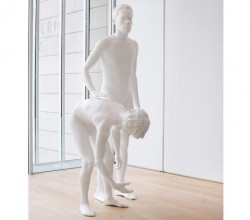
Art critics, when viewing contemporary art, sometimes struggle with the “where does it fit” question. Not so with Charles Ray, the prominent American sculptor. His indebtedness to sculpture traditions are all laid out in an interesting, sometimes intricate essay. Says this smitten critic of one piece: “If… traditional sculpture represents dormant consciousness, then “Sleeping Woman” is an entire genre’s brilliant incarnation.”

A Met Exhibit Contains Multitudes In Just Four Of van Gogh’s Flower Still Lifes

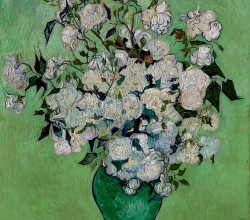
New York’s Metropolitan has opened a van Gogh “anti-blockbuster”. It has reunited, for the first time, four floral studies completed shortly before his death. Having so few paintings to look at leads to a more considered verdict. The colour loss in some pictures is dramatic but collectively they show qualities not always associated with this most famous of names – “intensity, modesty, and doggedness. Call them van Gogh’s secret.”

Barbara Hepworth: forms and hollows

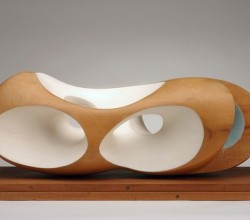
The Tate’s retrospective of Barbara Hepworth is the third of three major shows of female artists held this year. Hepworth’s graceful abstractions are duly noted (a nice video clip is here) but a sharp overall assessment is offered of her and the other artists – a lack of “intellectual charge”. “Has a woman artist ever done so? The stories here show that female artists tend to assimilate and adapt radicality pioneered by men.”

For Gavin Brown’s Closing Act, Jannis Kounellis’s Iconic Untitled (12 Horses)

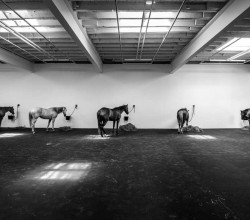
This starts off like an exhibition review but isn’t. Gavin Brown’s Enterprise was a New York gallery with a reputation for the unconventional. After 20 years, it is relocating. This piece reveals itself to be a lament about galleries like GBE that promote “the kind of art that they thought helped people”. Quirky to the last, the closing show included horses tethered to the walls of the gallery

23rd June 2015

Art / Not

Read before next discussing art at a dinner party. The writer admits to a panic attack at the art gallery: are the rolls of tape lying beside an artwork part of the work? This ambiguity is exactly what the highly regarded artist Richard Tuttle wants. So, is it art? Well, it’s OK not to know: “The mysterious, indefinable nature of art is only scandalous to those who want, always, to be sure.”

On Edward Hopper

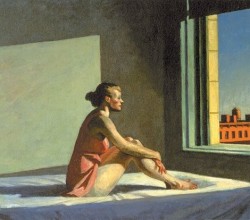
The paintings of Edward Hopper – one of America’s most original twentieth century artists – really grab our attention. The human figures are detached and unavailable, placed in scenes without any clear narrative. What’s going on, we wonder. This writer suggests something more that makes Hopper’s vacant paintings so arresting, an expression presumably of the introverted artist’s own interior – hidden emotional weight.

Sotheby’s to sell unique Pablo Picasso ceramics from the Collection of Marina Picasso

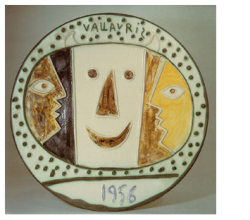
By mid-career, Picasso seems to have been effortlessly brilliant – at everything. On holidays in 1946, he wandered into a pottery studio and thus began a long involvement with ceramics. Critical acclaim for his work in this medium has gradually become more emphatic. The linked essay, images and an excellent little video come largely from Sotheby’s – hardly a disinterested party. But, it is Picasso.

Image: Madoura

Philip Guston, Timothy Taylor Gallery

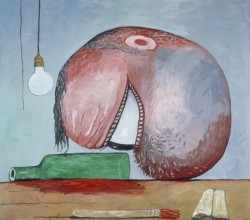
Philip Guston really did run his own race. A very successful abstract expressionist, he unpredictably returned to figurative painting in later career. However, now he developed new symbols such as potato heads and ku klux klansmen, often painted in unsettling, even sickly pinks. This symbolic vocabulary gives Guston’s late work real impact as he portrays “… creation and impotence … banality and high art”.

Battle of the fashion foundations: Prada vs Louis Vuitton

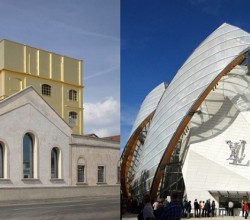
New public art galleries are surely a good thing, so what’s with the tone of misgiving? Prada and LMVH, both major fashion businesses, have funded new art galleries in Milan and Paris. We have all benefited from the generosity of the Courtauld’s and Fricks, so why not some more? Perhaps so. But you do sense the writer is just a bit uneasy – where does the branding stop and the art start?

Mirrors, vitrines and steel: Reflections on Jeff Koons retrospective at Guggenheim Bilbao

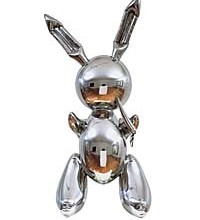
Jeff Koons affects some people like fingernails scratching a blackboard. “[A]n artist … transparently on the make” fumed Robert Hughes. Still, some curators think Koons is the real deal and when this show was at the Pompidou in Paris it broke all attendance records. The reviewer tries to give credit where credit is due and his verdict has nuance – “… perhaps there is more craft than art in this 40 year show.”

Boy Wonder: Eric Ravilious at Dulwich Picture Gallery reviewed

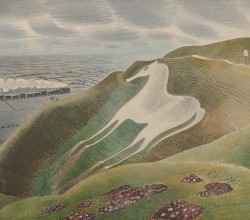
Eric Ravilious died in the Second World War at 39, just as his artistic career was gathering momentum. Sustained advocacy by some art writers and curators led to notable exhibitions and these, in turn, to strong auction results. The reviewer outlines Ravilious’ appeal – watercolours of the pre-war English countryside that are an “embodiment of civilisation – beautiful things to be both enjoyed and puzzled over.”